Choosing a dining table sounds simple until you begin looking.
At first, the decision often feels visual. Some people are drawn to the softness of a round table, while others prefer the structure of a rectangular one. But once the table becomes part of everyday life, shape begins to influence far more than appearance.
It affects how people gather, how a room flows, and how comfortably a space supports daily routines. The right choice isn't necessarily about style. It's about how the table lives within your home.

The Conversation That Happens Around a Round Table
There is something naturally inviting about a round dining table.
Without corners or defined ends, everyone shares the same space equally. Conversations tend to flow more easily because no seat feels separate from the group. Meals feel a little more relaxed, a little more connected.
In smaller dining areas, round tables often create a softer visual presence as well. The curved edges allow movement around the table to feel more natural, especially when space is limited.
Rather than defining the room with strong lines, a round table tends to blend into it.
For apartments, breakfast nooks, and compact dining spaces, this softness can make the room feel surprisingly open.

Why Rectangular Tables Remain a Classic Choice
A rectangular table offers a different kind of practicality.
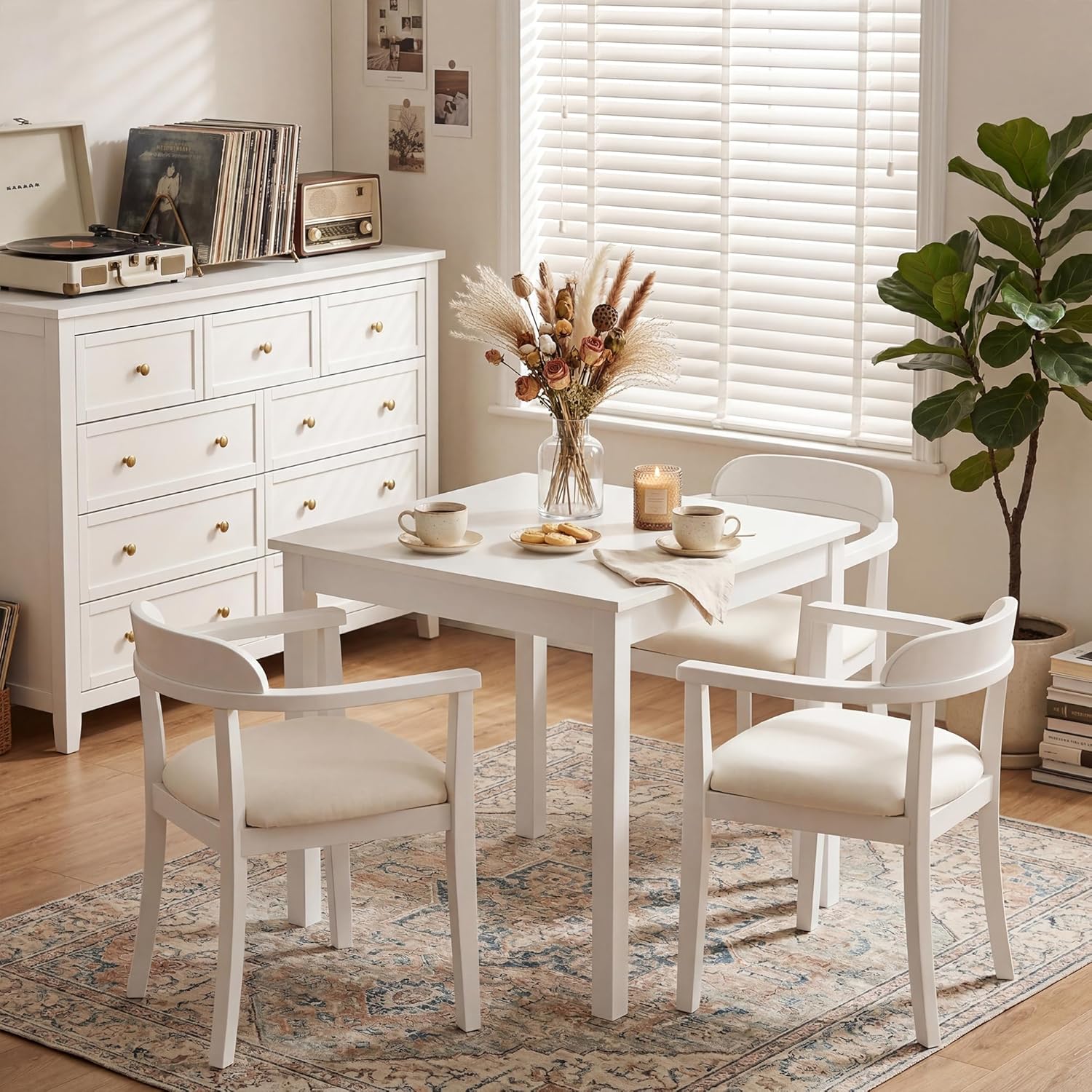
It follows the shape of most rooms, making it easy to position against walls or within longer dining areas. It also tends to accommodate more people comfortably, especially during gatherings or family meals.
There is a sense of structure that comes with a rectangular table. It anchors the room and provides a clear focal point without feeling overly formal.
For larger households or homes that regularly host guests, this shape often feels more adaptable over time.
It allows the dining space to grow alongside everyday needs.

Thinking About the Room Around the Table
The table itself is only part of the decision.
What matters just as much is the space that surrounds it.
A beautiful table can quickly feel oversized if there isn't enough room to move comfortably around it. Likewise, a table that feels too small may leave the room feeling unfinished.
In compact homes, round tables often create more flexibility because they soften pathways and reduce visual bulk. In larger dining rooms, rectangular tables frequently feel more balanced because they echo the shape of the space itself.
The best dining table rarely competes with the room. It works with it.

Choosing the Shape That Fits Your Life
Both shapes have their strengths.
A round dining table encourages closeness and works beautifully in smaller spaces. A rectangular dining table offers structure, flexibility, and room to grow.
The decision ultimately comes down to how the table will be used on an ordinary day.
Will it host quick breakfasts and quiet evenings? Will it become a gathering place for family and friends? Will it sit in a compact corner or anchor an entire room?
When you consider the life that happens around the table—not just the table itself—the right choice often becomes much clearer.